
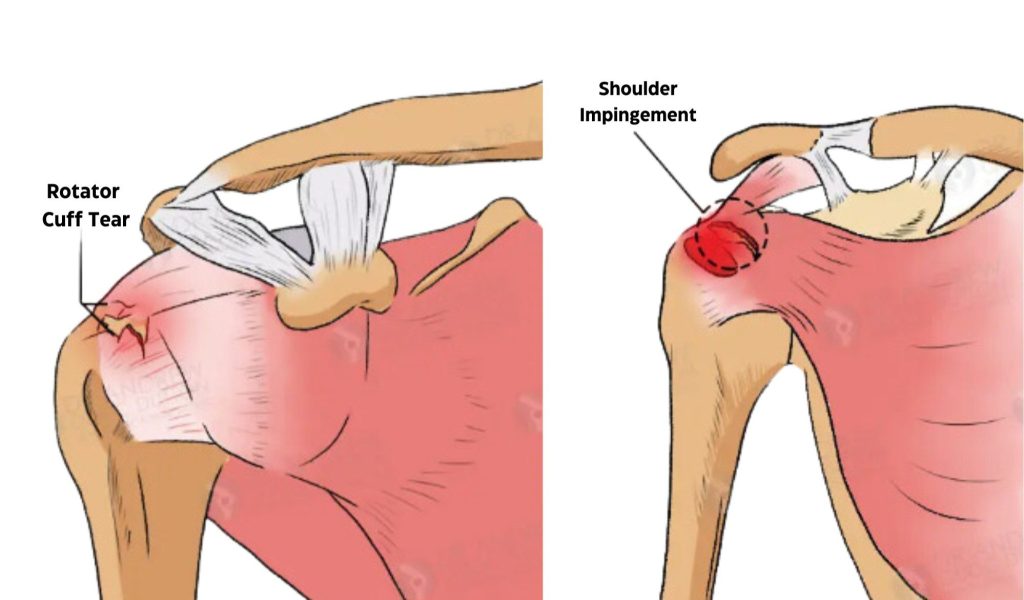
Shoulder pain is one of the most common musculoskeletal complaints, yet few areas of the body are as misunderstood as the shoulder joint. Two diagnoses come up repeatedly—rotator cuff tears and shoulder impingement syndrome—and they are often used interchangeably. They are not the same condition, even though they can overlap, coexist, and sometimes lead to one another.
Understanding the difference between rotator cuff tears and impingement syndrome is more than a matter of terminology. The distinction influences diagnosis, treatment options, recovery timelines, and long-term shoulder function. This guide breaks down both conditions clearly, explains how they differ, and outlines what patients should know when evaluating symptoms and planning care.
Understanding How the Shoulder Works
The shoulder is a highly mobile joint designed for reach, rotation, and strength. That mobility comes at the cost of stability, which is why shoulder injuries are so common.
At the center of this system are the rotator cuff muscles—four small but critical muscles that originate on the shoulder blade and attach to the upper arm via rotator cuff tendons. These tendons stabilize the shoulder joint while allowing smooth, controlled movement.
Above the rotator cuff is a narrow space beneath the acromion (a bony part of the shoulder blade). This space is where problems often begin.
What Is Shoulder Impingement Syndrome?
Shoulder impingement syndrome occurs when the rotator cuff tendons or surrounding soft tissue become compressed during shoulder movement. This pinching usually happens when the arm is raised overhead or extended forward.
Why Impingement Happens
Impingement is typically a mechanical problem. Common contributors include:
- Repetitive overhead activity
- Poor posture or rounded shoulders
- Weakness or imbalance in the rotator cuff muscles
- Abnormal movement of the shoulder blade
- Bone spurs narrowing the subacromial space
Over time, this repeated compression leads to inflammation, pain, and reduced range of motion. Early impingement is often reversible, but when ignored, it can progress.
Common Symptoms of Shoulder Impingement Syndrome
- Gradual onset of shoulder pain
- Pain when lifting the arm overhead
- Discomfort reaching behind the back
- Night pain when lying on the affected side
- Mild weakness without a sudden injury
This condition is sometimes described in conversations as shoulder impingement vs rotator, but the distinction is important—impingement is a process, not a tear.
What Is a Rotator Cuff Tear?
A rotator cuff tear is structural damage to one or more of the rotator cuff tendons. Unlike impingement, which involves compression and inflammation, a tear means the tendon fibers themselves are partially or completely disrupted.
Types of Rotator Cuff Tears
Rotator cuff tears vary in severity:
- Partial thickness tears: Only part of the tendon is damaged
- Full thickness tears: The tendon is torn completely through
- Acute tears: Often caused by trauma or sudden injury
- Degenerative tears: Develop gradually from wear and tear
A full thickness tear may significantly impair strength and shoulder stability, especially if left untreated.
Common Causes
- Long-standing shoulder impingements
- Repetitive overhead work or sports
- Age-related tendon degeneration
- Falls or sudden lifting injuries
In many cases, impingement vs rotator cuff is not an either-or situation. Chronic impingement can weaken tendons and eventually lead to tearing.
Key Differences Between Impingement and Rotator Cuff Tears
While the symptoms overlap, there are meaningful clinical differences between the two conditions.
Nature of the Problem
- Impingement syndrome involves inflammation and compression
- Rotator cuff tears involve tendon damage
Pain Pattern
- Impingement pain is often activity-related and gradual
- Tears may cause sharp pain, weakness, or loss of function
Strength Loss
- Impingement usually preserves strength
- Tears often cause noticeable weakness, especially lifting or rotating the arm
Recovery Outlook
- Impingement often responds well to conservative care
- Tears may require more aggressive intervention depending on severity
This distinction is central to shoulder impingement vs rotator discussions and directly affects treatment decisions.
Diagnosis: How Doctors Tell the Difference
A thorough evaluation is essential because symptoms alone are not always definitive.
Physical Examination
Clinicians assess:
- Active and passive range of motion
- Strength of individual rotator cuff muscles
- Pain patterns during specific movements
- Shoulder blade mechanics
Imaging Studies
- X-rays can reveal bone spurs or joint narrowing
- MRI provides detailed images of rotator cuff tendons and soft tissue
- Ultrasound may be used to assess tendon integrity dynamically
Accurate diagnosis prevents ineffective treatment and shortens recovery time.
Treatment Options for Each Condition
Treating Shoulder Impingement Syndrome
Most shoulder impingements respond well to non-surgical care when addressed early.
Common approaches include:
- Physical therapy to restore movement and strengthen stabilizing muscles
- Anti inflammatory medicine to reduce pain and swelling
- Activity modification to limit aggravating movements
- Postural correction and ergonomic adjustments
A well-structured treatment plan focuses on restoring mechanics rather than masking symptoms.
Treating Rotator Cuff Tears
Treatment depends on tear size, patient activity level, and functional demands.
Non-Surgical Management
- Physical therapy to strengthen surrounding muscles
- Pain control strategies
- Activity modification
Partial tears and some degenerative tears can often be managed conservatively.
Surgical Treatment
Surgical treatment may be recommended when:
- Pain persists despite conservative care
- Strength loss affects daily activities
- A full thickness tear is present
- The patient is highly active or relies on overhead strength
Procedures may include rotator cuff repair, often performed arthroscopically.
Recovery and Long-Term Outcomes
Recovery timelines vary widely.
- Impingement syndrome often improves within weeks to months
- Rotator cuff repair requires a longer rehabilitation period
Post-surgical recovery emphasizes gradual restoration of range of motion, followed by strengthening. Long-term outcomes are generally favorable when treatment is timely and appropriate.
Why Early Evaluation Matters
Many shoulder injuries worsen when ignored. Persistent shoulder pain, especially when accompanied by weakness or night discomfort, should not be dismissed as normal aging or overuse.
Early diagnosis:
- Prevents progression from impingement to tearing
- Improves response to conservative treatment
- Reduces the likelihood of surgical intervention
Understanding the difference between shoulder impingement syndrome and rotator cuff tears empowers patients to seek care before long-term damage occurs.
Frequently Asked Questions
Is shoulder impingement the same as a rotator cuff tear?
No. Shoulder impingement syndrome involves compression and inflammation of soft tissue, while a rotator cuff tear involves structural damage to the rotator cuff tendons. They are related but distinct conditions.
Can shoulder impingement turn into a rotator cuff tear?
Yes. Chronic impingement can weaken the tendons over time, increasing the risk of partial or full thickness tears if left untreated.
How do I know if I have a tear or impingement?
A clinical examination combined with imaging, such as MRI, is the most reliable way to distinguish between impingement vs rotator cuff injuries.
Does every rotator cuff tear require surgery?
No. Many partial tears and degenerative tears respond well to non-surgical care, including physical therapy. Surgical treatment is considered when pain or weakness persists.
How long does recovery take?
Impingement may improve within weeks, while rotator cuff repair can require several months of rehabilitation, depending on tear severity and patient factors.
Can physical therapy help both conditions?
Yes. Physical therapy is often the first-line treatment for shoulder impingements and is a critical component of recovery for rotator cuff injuries, whether managed surgically or not.
Understanding the difference between rotator cuff tears and impingement syndrome is the foundation for effective care. With proper diagnosis and a tailored treatment plan, most patients can regain strength, mobility, and confidence in their shoulder function.
If you’re looking for a board-certified workers’ compensation review, be sure to reach our Austin office. Give us a call – we’d love to discuss all the solutions we provide – reach us at (512) 519-9069 or submit a request here.