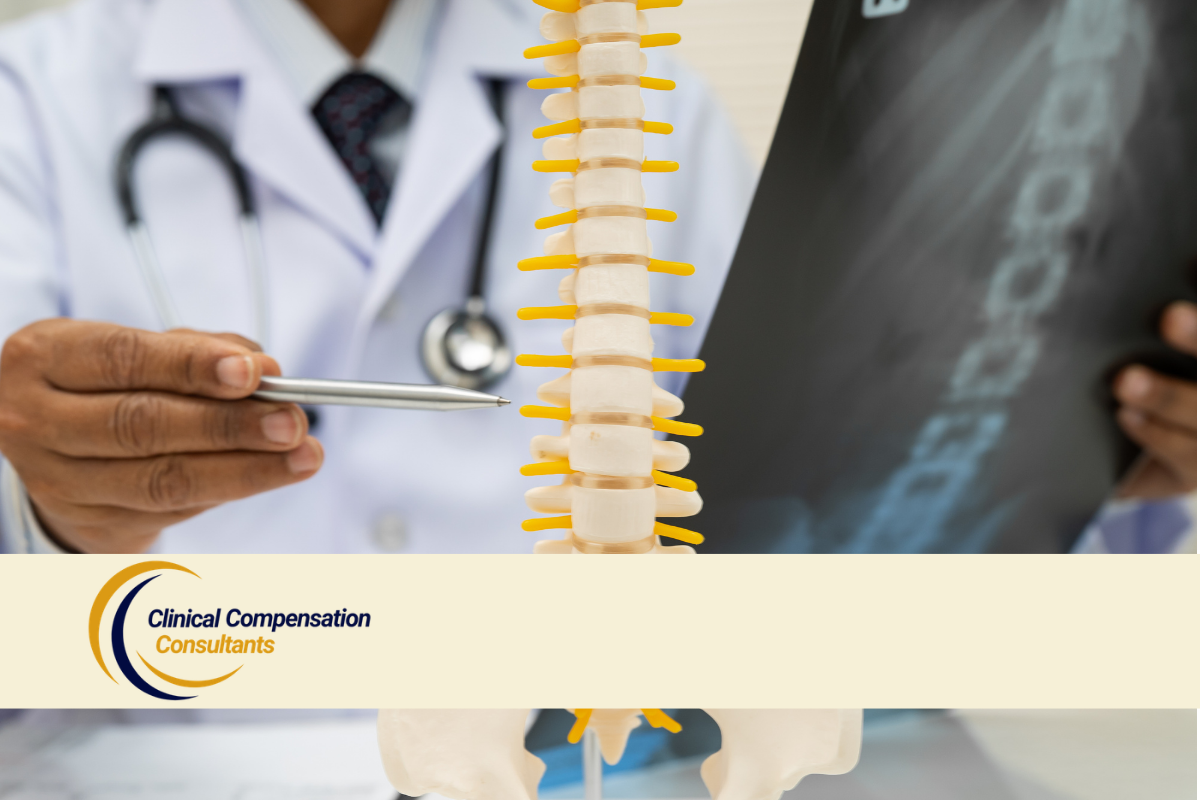

How Spinal Fusion Can Create New Complications
Several weeks ago, I wrote about two of the most dreaded words in workers’ compensation. The words “spinal fusion” can represent a significant problem in addressing workers compensation cases. With the assumption that the need for a lumbar fusion has been adjudicated, and the perceived need is a function of the compensable event, one must realize that in an effort to address these pain complaints, a solidly healed spinal fusion may ameliorate the symptomology (or relieve the symptoms noted). What needs to be incorporated into the mindset of the claims professionals is that with this fusion, normal spinal anatomy is compromised, and the stressors normally encouraged at the level(s) involved is translated either above or below.
Red Flags for Adjacent Segment Diseases
Therefore, one of the long-term unfortunate consequences of a spinal fusion is a disease process known as adjacent segment disease. Clearly, if there is adjacent segment disease identified at the time of injury, this is a clear indicator of a long-standing, pre-existing, and unrelated comorbidity. However, if this particular pathology is identified months or years after the noted fusion, this represents a significant complication. The clinical literature notes that between 5% and 30% of the patients will develop this process after spinal fusion.
This is not a new disease; however, this diagnosis represents an additional degenerative change in the region of the spine compromised by the surgical fusion. One must be clear that the pathology is not limited to x-ray findings alone; the noted findings must be combined with appropriate clinical examination demonstrating objectified symptomology (or clinically confirmed symptoms) at the proximal or distal level. To be clear, this complication can occur months or years after the surgical intervention.
In Texas, the clinical standard is that all care reasonably required to address the sequelae of the compensable event must be treated. The original injury must be a “producing cause” of the current pathology. Therefore, a successful lumbar fusion, one that has noted to have reached maximum medical improvement, has been assigned an impairment rating, and the claim has been closed; this individual can return seeking an additional surgical intervention to address this pathology. And if adjacent segment disease has been objectified, you as the claim file handler must engage this diagnosis and provide appropriate treatment.
Questions That Must Be Resolved
If such a scenario lands on your desk, a careful analysis of all cogent facts must be completed to ascertain that this is clearly adjacent segment disease that has been objectified both from a physical examination perspective, and a diagnostic perspective, and is clearly a function of the compensable injury sustained. One must confirm the original injury, confirm that surgical intervention with a solid fusion had occurred, that the pain complaints are at a different level than the original injury, and the identified degeneration of an adjacent level was not previously symptomatic. While not ruling out this diagnosis, a careful clinical assessment needs to be obtained to ascertain if this particular finding is in fact related or a sequela of the compensable event.
One must ensure that the detailed clinical history provided includes several factors. These would include a clinical analysis of degeneration at adjacent level before the fusion, are the current symptoms anatomically consistent with the adjacent segment (note the nerve root function and corresponding findings), is there a cogent clinical argument explaining and linking the previous fusion to the current newer pathology. An additional consideration is whether there are noted comorbidities such as age, obesity, tobacco consumption, multiple level fusions or other risk factors. One must note if all non-operative options been fully explored.
As soon as this file lands on your desk, initiate a comprehensive, evidence-based medicine review so that the appropriate determination of adjacent segment disease can be established as opposed to a coincidental degenerative pathology.
The Bottom Line on Adjacent Segment Disease
Bottom line, adjacent segment disease is very real. However, it is not an automatic or inevitable sequela of lumbar fusion surgery. Your investigation has to include a careful analysis of the anatomy involved, the biomechanics, the clinical presentation, and timing of the symptomology. If you, as the adjuster, fully understand adjacent segment disease, and ask the appropriate questions, you will be in a better position to assign medically defensible claims decisions.