
When Imaging Findings Start Driving the Claim
After spending decades assisting claim file handlers with medical issues in their claims, there is a version in nearly every file that we see. A worker reports a back injury. Or perhaps a shoulder injury. As a matter of course, enhanced imaging studies are sought. Plain radiographs are great for osseous injuries but do little to address soft tissue findings. The MRI studies, particularly with the newer magnets, are great at identifying particularly subtle lesions.
The radiologist discovers a disc herniation, facet joint disease, and other degenerative changes. The pathology is there. The shoulder study documents a partial or full thickness tear of the supraspinatus in a 52-year-old individual. The issue is that the treating provider is ethically required to address each piece of pathology identified. Treating providers often feel compelled to comment on every finding, whether or not it is related to the compensable work injury.
The net result is that the claim experience, appropriate costs climb, reserves are insufficient, and the inevitable claim creep occurs. When this happens, the one question that needs to be asked is “what happened?”
The Real Question: What Actually Happened?
This is where a clear and thorough discussion of the actual mechanism of injury (MOI) is needed. Specifically, how is that body part loaded, stressed, or otherwise traumatized during the identified event? This mechanism of injury tells you which specific body parts or tissues are at risk. Additionally, the MOI should let you know what forces were involved and what specific injuries or pathology were physically plausible given the totality of the scenario.
MRI Results Show Pathology, Not Causation
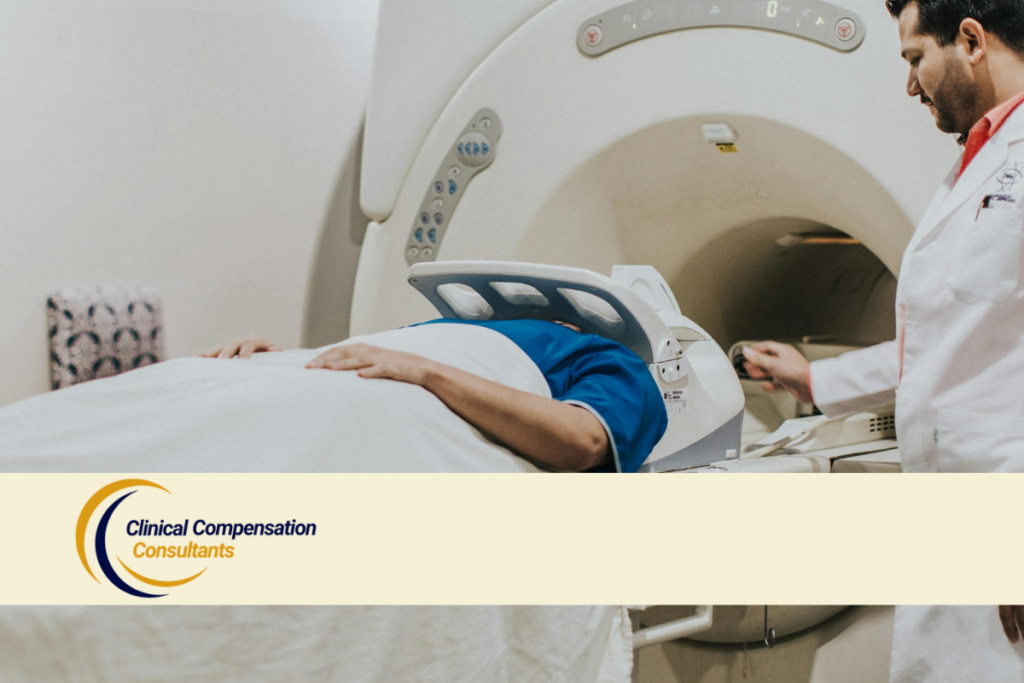
Understanding that this MRI study takes approximately 15-45 minutes, this is merely a snapshot of the current clinical situation. It demonstrates the tissue structure (or compromise) at the time of the study and clearly not at the time of injury. Moreover, this study does not offer any indication about what caused the identified pathology, or any other of the related questions that need to be resolved.
Why Mechanism of Injury Matters
Please understand that the radiologists are not asked to answer any specific questions, and they only describe what they see on the films. The interpretation of the findings should be provided by the treating provider who notes the age of the injured employee, the reported mechanism of injury, the past medical or surgical history, and any other relevant factors. The utilization of evidence-based medicine is the hallmark, and all too often is not applied when determining what pathology is a function of the identified event.
Consider a 52-year-old warehouse worker who slips on a wet floor and catches himself before falling. His back hurts the next morning. He sees a doctor, who orders an MRI. The scan shows a disc herniation at L4-5, moderate facet arthropathy at multiple levels, and some foraminal narrowing. The question that should drive everything is this: can a near-fall, with no actual impact and no reported immediate pain, physically produce a disc herniation in a 52-year-old spine?
Applying the standards of evidence-based medicine, acute disc herniations from relatively low force of events in individuals who are not as close to 18 as they want to be rarely occur. The notation of multiple degenerative changes, or the findings on the T2 or STIR images; will establish if the pathology identified is a function of the date of injury. Given that the probability is that this is an ordinary disease of life clinical situation, one could reasonably argue this should be excluded from the compensable event.
A Common Example: The MRI Finds More Than the Injury
Adjusters, claims managers/supervisors, are often handed MRI report and a physician causation opinion that does not contain any context for the determinations made. The result from that scenario is that the imaging studies are driving claim decisions rather than competent clinical reasoning.
Three Questions Every Claim Should Answer
In summary, ensure that the three questions are answered at the outset of every claim:
- What is the specific mechanism of injury?
- What body parts or tissues were actually stressed or injured?
- Are the findings noted consistent with the above?
If these answers do not align with the findings noted, the causation determination deserves appropriate scrutiny by an independent source.
Better Claim Outcomes Start with the Right Foundation
To be clear, this is not about denying legitimate injuries. Acute disc herniation still in fact occur. Rotator cuff injuries can happen. But one must apply all perspectives to make the most appropriate decision. MRI studies demonstrate the current pathology but do nothing to illustrate causation or plausibility. Start out of the gate appropriately, and a great deal of claim complexity becomes much easier to resolve.