
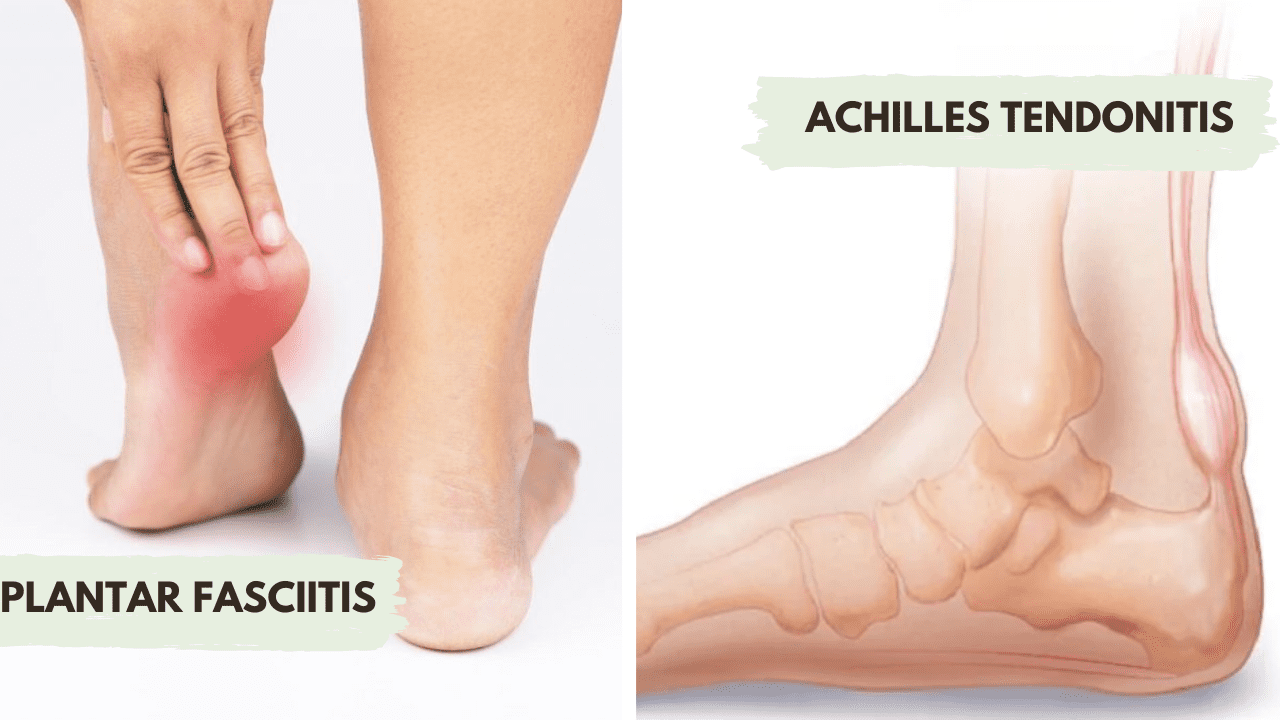
Pain in the distal lower extremity is a commonly reported complaint in both clinical practice and workers’ compensation cases. One recurrent area of confusion involves distinguishing between plantar fasciitis and Achilles tendinitis—two conditions that can present with overlapping symptoms but represent distinct disease processes that require different diagnostic considerations and treatment pathways.
Both conditions can generate significant foot pain, particularly around the heel bone (calcaneus), making accurate differentiation essential when determining injury causation, appropriate care, and compensability. While these diagnoses often coexist in discussions, they involve different anatomical structures, differing symptom locations, and separate clinical implications.
What Is Plantar Fasciitis?
Plantar fasciitis is characterized by inflammation and degeneration of the plantar fascia, a thick band of tissue running along the bottom (plantar side) of the foot. This structure extends from the anterior portion of the heel bone (calcaneus) to the base of the toes and plays a critical role in supporting the longitudinal arch of the foot during weight-bearing activities.
Key Characteristics of Plantar Fasciitis
- Pain localized to the underside of the heel
- Discomfort extending into the arch of the foot
- Sharp, stabbing pain during the first steps in the morning
- Pain with prolonged standing or walking after periods of rest
- Significant tenderness with direct thumb palpation at the anterior calcaneus
In more advanced or chronic cases, the plantar fascia may thicken and lose elasticity, increasing symptom intensity. Despite the “itis” label, plantar fasciitis frequently represents a degenerative condition rather than a purely inflammatory process, though treatment often still involves anti-inflammatory interventions to manage symptoms.
This disorder is widely recognized as a chronic condition that may persist for many months or even years if not properly addressed.
Common Causes of Plantar Fasciitis
- Repetitive strain or overuse injuries
- Poor foot biomechanics (flat feet or high arches)
- Prolonged standing on hard surfaces
- Obesity or significant weight gain
- Running or jumping activities
- Excessive or improper physical activity
- Natural age-related degenerative changes
Each of these factors contributes to microtrauma within the plantar fascia, leading to tissue breakdown and chronic pain.
What Is Achilles Tendinitis?
Achilles tendinitis involves inflammation or degeneration of the Achilles tendon, the largest tendon in the body. It attaches the gastrocnemius and soleus muscles (calf complex) to the posterior portion of the heel bone, enabling essential movements such as walking, running, and climbing through plantar flexion of the ankle.
Key Characteristics of Achilles Tendinitis
- Pain localized at the back of the heel or lower calf
- Tenderness along the length of the tendon
- Pain that worsens with walking, running, or stair climbing
- Stiffness, particularly after rest
- Occasional swelling or warmth at the tendon insertion
Unlike plantar fasciitis, Achilles tendinitis symptoms remain confined to the posterior heel and tendon region, not the plantar surface of the foot.
Common Causes of Achilles Tendinitis
- Repetitive overuse or sudden increases in exercise load
- Lack of calf flexibility or muscle weakness
- Age-related tendon degeneration
- High-impact running or jumping
- Training on rigid or inclined surfaces
- Abrupt changes in footwear or training volume
Again, excessive or poorly structured physical activity serves as a primary precipitating factor.
Why These Conditions Are Often Confused
The confusion between plantar fasciitis and Achilles tendinitis occurs largely because both structures attach to the calcaneus, and both can produce pain near the same general anatomical region. Clinically, each involves a pathological response to tissue overload, including:
- Microtearing
- Localized degeneration
- Low-grade inflammation
- Progressive pain
However, these similarities do not mean they are the same injury.
The Primary Diagnostic Difference: Location of Pain
The most reliable distinguishing factor between plantar fasciitis and Achilles tendinitis is pain location:
- Plantar fasciitis: Pain on the bottom of the heel and arch
- Achilles tendinitis: Pain on the posterior heel and Achilles tendon
This distinction becomes evident during a detailed physical examination, making precise documentation critical.
Are These Conditions Caused by a Single Work Injury?
From an evidence-based medicine perspective, both plantar fasciitis and Achilles tendinitis are characteristically chronic conditions. They typically develop through repetitive micro-injury over extended periods, rather than resulting from a single isolated trauma.
Thus, establishing a causal relationship to a discrete workplace incident requires thorough documentation and medical justification. A specific compensable injury must demonstrate:
- Acute trauma sufficient to cause sudden tissue damage
- Immediate symptom onset consistent with injury mechanics
- Objective clinical findings directly attributable to the reported event
Absent this level of objectification, these diagnoses are usually categorized as ordinary diseases of life, related to biomechanical strain and routine physical stresses rather than singular occupational injuries.
Required Clinical Evaluation
Accurate diagnosis demands a comprehensive clinical approach, commonly utilized in both orthopedics and sports medicine:
1. Detailed Patient History
Including symptom onset, training changes, footwear alterations, recent increases in physical workload, and activity patterns.
2. Focused Physical Examination
Assessing:
- Palpation tenderness along the plantar fascia versus Achilles tendon
- Range of motion testing
- Foot biomechanics evaluation
- Gait observation
3. Diagnostic Imaging
- Plain radiographs: May identify traction spurs, degenerative bony changes, or calcaneal abnormalities.
- MRI imaging: Used when symptoms persist despite conservative treatment or when surgical consideration becomes necessary. MRI can reveal fascial thickening or tendon degeneration not otherwise visible on X-ray.
Treatment Options
Care typically progresses from conservative management to interventional therapy:
Conservative Treatment
- Activity modification and rest
- Ice and elevation
- Anti-inflammatory medications
- Stretching programs for the calf and plantar fascia
- Customized orthotics
- Structured physical therapy
Interventional Treatment
- Corticosteroid or platelet-based injections
- Advanced manual therapies
Surgical Intervention
Reserved only for severe cases where prolonged conservative treatment fails to resolve symptoms.
Importance of Accurate Diagnosis in Workers’ Compensation Claims
Proper diagnosis ensures:
- Correct treatment selection
- Realistic prognosis expectations
- Accurate determinations regarding medical causation and compensability
Failure to differentiate between plantar fasciitis and Achilles tendinitis may result in misclassification of injuries, inappropriate care strategies, and flawed legal conclusions regarding workplace responsibility.
Final Considerations
In cases where heel pain and foot pain are alleged to result from a specific compensable event, medical providers must demonstrate:
- Precise anatomical localization
- Thorough clinical documentation
- Imaging confirmation when appropriate
- Clear distinction between acute injury and chronic pathology
Only through this evidence-based approach can clinicians and claims professionals responsibly determine whether the reported condition represents a work-related injury or a chronic degenerative finding developed over time.
Accurate identification benefits all parties — ensuring injured workers receive proper care while supporting objective claim evaluation grounded in medical science.