
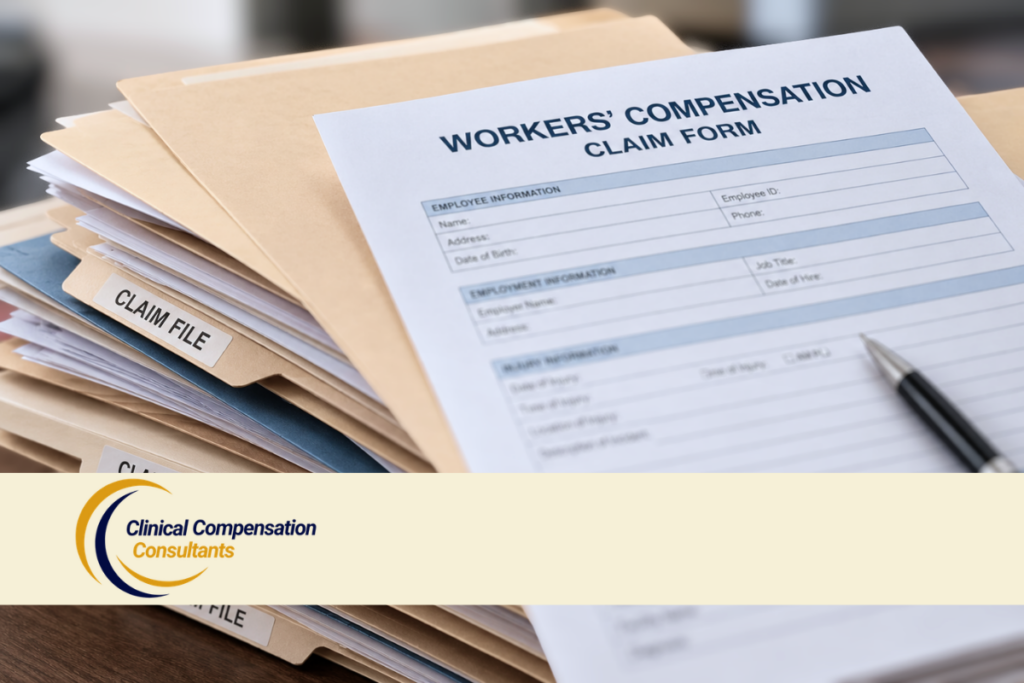
A particularly common theme that we hear about nowadays is that our workforce is aging. As a baby boomer, a guy who has completed 74 trips around the sun, and sits at his desk every day; I know there are an increasing number of individuals like me who want to continue to work. Not everyone has a sedentary job like mine, and there are those individuals who continue to hoist luggage into the bellies of aircraft, continue to hammer nails into shingles of a roof, or simply paint the fence for others. The one thing we all have in common (beyond our excessive number of pages torn off the calendar) is that we all share any number of long-term degenerative disease processes.
The Reality of An Aging Workforce
That fence painter steps on a small rock and inverts his ankle. An urgent care evaluation is conducted, plain X-rays are obtained, no fractures or other acute pathology is noted. This is diagnosed as a mild ankle sprain and is treated conservatively, with success as the ankle complaints disappeared. However, several months later this aging baby boomer has retained an attorney as there are ongoing complaints of ankle pain associated with arthritic changes noted in the talar dome. Thus, the determination that the injury was a mild soft tissue strain is challenged by the attorneys.
What Does the Claim File Actually Document?
A review of the claim file notes outlining the mechanism of injury and that no specific pathology was noted in the urgent care scenario and that the injured employee got better with minimal intervention. With the understanding that no specific focal lesion relative to the talar dome, it was noted at the time of the original plain films, and that there were degenerative changes and minimal osteophytes reported, these specific findings were not identified in the file notes. Nor was there any conversation relative to any findings noted in the contralateral uninvolved ankle. Lastly, the total of the clinical examination findings are not reported in the claim note.
Acute Injury or Degenerative Disease?
Therefore, given the worker’s age, the low-energy mechanism, minimal symptoms, and essentially normal examination findings, the original determination may have been clinically reasonable. The issue becomes that there is no specific objective data provided to clinically supporting that decision. A basic tenet of Workers’ Compensation is that the defensibility standards outlined, those noting explanation, documentation, and consistency, were not fully applied.
An arthritic talar dome is rarely a diagnosis made on the basis of symptoms alone. It is generally the result of long-term cartilage wear, previous trauma, or age-related degeneration. When such findings appear on imaging obtained immediately after a relatively minor inversion injury, claim professionals should ask whether they represent a pre-existing condition rather than an acute injury.
What Makes a Claim Decision Defensible?
What makes a decision defensible? By definition, a defensible decision should be able to withstand any scrutiny from all stakeholders. To be clear, this is not about being perfect. It is about any standard that should be applied in terms of demonstrating a reasonable, evidence-based medicine determination of the clinical facts supporting that conclusion. The standard should be understood by the claim file handler that the decision will be reviewed by claimants, employers, attorneys, adjudicators, quality assurance teams, and regulators. Everything written down will, at some time, be reviewed. In completing the notes, the thought that should be in the back of one’s mind is “why did you make that determination?”
If You Didn’t Write It Down, It Did Not Happen
Clear, rational reasoning needs to be easily observed in the notes provided. One must explain not just what happened, but why it happened and why the determinations were assigned. Thorough documentation of the determination from the perspective of accepting a claim through the denial of a claim or termination of benefits needs to be incorporated. In clinical medicine there is that old axiom “if you did not write it down it did not happen.”
The best notes point conclusions to specific facts. Reference the medical opinions that served at the basis for the determination and what clinical facts were considered when rejecting other medical opinions. And do not be vague, be as straightforward as you possibly can.
Documentation Is Your Strongest Defense
The reality is documentation is your strongest defense. And do not think you will remember that documentation 12 months from now. Critical areas that require thorough documentation include the initial investigation, the medical reviews completed, any communications from all parties concerned, particularly the claimant communication/contacts, and any return-to-work discussions. Good documentation would include an objective scenario to be entered in the claim notes, which would include the date, the source of information, independently confirmable facts, the ultimate decision and the basis for that determination.
Common documentation errors would include incomplete claim notes, missing rationale, entries that were submitted long after the event and may not reflect what actually occurred. These entries should not include subjective language on the part of the claim file handler, should be based on what can be independently confirmed by any source in the future.
Before You Finalize the Determination, Ask Yourself:
And be consistent. Similar facts should lead to similar decisions irrespective of the injured employee. If it can be documented that there is an inconsistency in handling claim files, this could lead to exposure from both a legal and reputational perspective.
And when all is said and done, before you finalize any specific determination ask yourself:
- Do my notes clearly explain the determination and provide clear clinical and logical rationale for that determination?
- Have I referenced all supporting evidence that supports the determination made?
- Can I effectively defend the determination made on a consistent basis?
If the answer is no to any of the above questions, take a deep breath, collect yourself, and gather more information. There needs to be sufficient information that would divert any negative response to the above noted questions to a positive one. While you are taking that pause, consider the consequences of “non-defensible decisions.” Reopening claims, dissatisfaction from your clients, the employer, potential regulatory scrutiny, not to mention higher claim costs and a possible erosion of trust in your judgement.
Could You Defend that Decision Six Months From Now?
We all know that each claim file handler makes complex decisions on a daily basis. Your personal success and growth are not measured by solely making the “right decision”; it must be based on defensible determinations that everyone can see. And remember, claim file handlers do not make clinical determinations. Asking a specific question of your physician reviewer can only help in the decision-making process. The strongest claim file handlers ensure that every decision is fully explainable, completely documented, and consistent across all files.
To be clear, a defensible decision is more than a conclusion. It is a detailed narrative supported by specific facts, clearly documented and obtainable from the file, and applied consistently to all claims handled. Before completing your next claim file note, a question that should be resolved after re-reading your entry would be “could someone reviewing this file six months from now understand exactly why I made this decision?”